If you are responsible for your company’s growth, AI search creates a difficult question: do you need an entirely new strategy to remain visible, or are you about to spend time and budget chasing another marketing acronym?
Fortunately, Google has finally released its long-anticipated “guidelines on how to optimize for AI search.” In a nutshell, to optimize your site for AI search and generative search engines, you should:
- Follow SEO best practices
- Make uniquely helpful content
That’s it.
That may sound underwhelming. But for us at RedTree, it was validating.
We’ve been following the impact of AI on search and how to perform generative engine optimization since the beginning, but through all the noise, we’ve never wavered from our strategy’s guiding philosophy: creating content that genuinely helps your customers, maintaining a technically healthy website that search engines can access and understand, and using reliable data to continuously adapt.
With clearer guidance from Google, we built this guide to help business leaders and decision-makers separate durable SEO + AIO investments from the hype cycle. We’ll explain what Google’s new recommendations mean in practice, which elements of our early GEO strategy they validate, what deserves priority now, and how to measure whether your investment is producing meaningful business results.
What Google’s Guidance Confirmed & What It Clarified
When we first wrote about generative engine optimization, there was no official playbook. The companies building AI Search experiences had not yet offered clear guidance on how businesses should respond.
So, like many SEO teams, we had to work from what we knew: how search engines find and evaluate content, what makes information genuinely useful to people, and which strategies tend to hold up when the technology changes.
We made a few educated bets.
- SEO fundamentals would still matter: Confirmed.
- Original, expert-led content would be more valuable than generic content: Confirmed.
- Technical site health would remain essential for visibility: Confirmed.
- Schema, structure, and tracking would support the strategy: Confirmed…ish.
Some were validated almost exactly as we expected. Others needed a little more nuance. And, perhaps most helpfully for businesses trying to decide where to invest, Google has now made clear which popular AIO tactics are more noise than strategy.
We Predicted That Strong SEO Would Still Be the Foundation
Before Google published this guidance, our core assumption was simple: AI search would not make traditional SEO irrelevant.
Google has confirmed that its generative search features draw from the same broader Search systems used to discover, understand, and surface web content. So, good SEO can yield good AIO visibility.
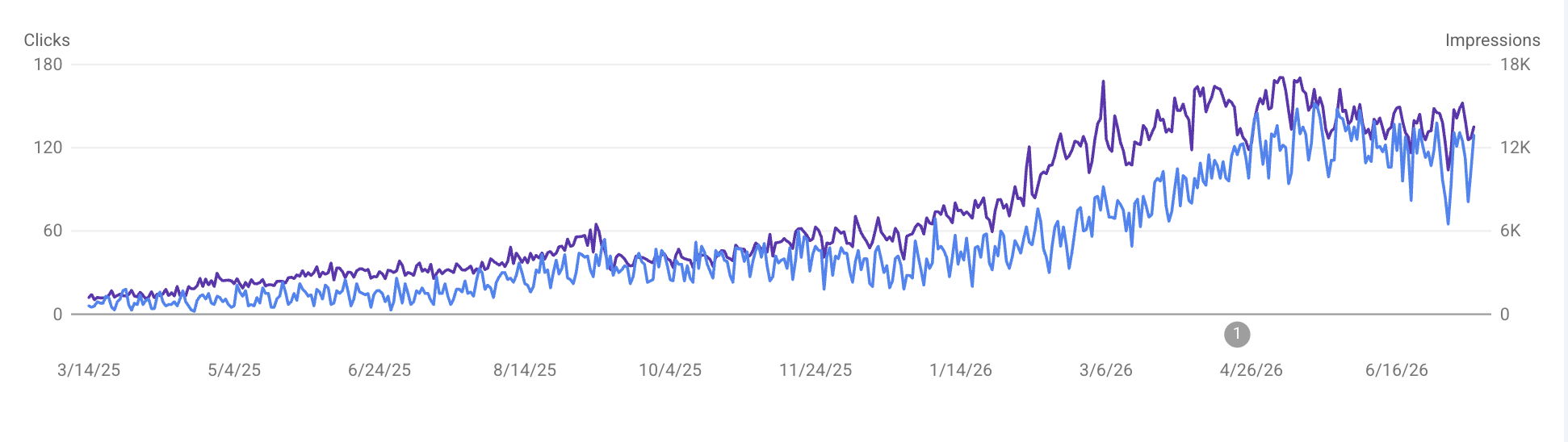
In our experience, we’ve been able to grow organic traffic, but we’ve also seen that growth translate directly into AI traffic sessions originating from content we’ve produced. In one ecommerce account, organic search generated 5,010 clicks during the reporting period, while identifiable AI referral sources generated 13 highly-engaged visits.
Those figures show the current reality clearly: AI referral traffic may still represent a small share of overall discovery, even on sites where it is beginning to show promise. Organic search is still a massive channel.
For business leaders, this is the important part: AI search is another reason to make sure your SEO strategy is actually working, not the newest strategy to replace it.
We Predicted That Original, Expert-Led Content Would Matter More Than Commodity Content
Our original GEO guidance emphasized EEAT, content gaps, firsthand perspective, credible sources, and clear information that helps a reader make a decision. Google’s guidance strongly reinforces that direction.
It specifically encourages businesses to create useful, reliable, people-first content that brings something new to the conversation. Google refers to the alternative as commodity content.
Commodity content is information that is easy to reproduce, based largely on common knowledge, and unlikely to offer readers anything they could not find on dozens of other websites.
This matters because AI-assisted search can summarize what is already widely known. Your opportunity is to give customers and search systems something worth finding beyond the obvious answer.
Every page doesn’t need to contain a groundbreaking original study, but your content should give people a reason to trust your business as a source of useful information. That could mean sharing firsthand experience, a unique point of view, original research, practical expertise, a clearer explanation of a complicated process, or a level of specificity that generic content cannot provide.
We Predicted That Technical SEO Would Still Determine Whether a Site Could Be Found
We also argued that a technically healthy website would remain central to generative-search visibility. Google agrees.
Your pages still need to be crawlable and eligible to appear in Search. Your site still needs clear structure, accessible content, a strong page experience, and ongoing maintenance. AI search may change how people receive information, but it does not remove the need for a website that can be found, loaded, navigated, and understood.
Technical SEO protects the visibility you have already earned and gives your best content a fair chance to be discovered.
We Predicted That Schema Would Still Support Search Visibility — With an Important Clarification
Our original GEO guidance recommended structured data as one way to help search engines better understand and present website content.
That still holds true as part of a strong SEO strategy.
Schema can help eligible pages appear with rich results, clarify key information about products, services, reviews, FAQs, videos, images, local businesses, and other page elements, and support a cleaner relationship between your content and how it may appear in search.
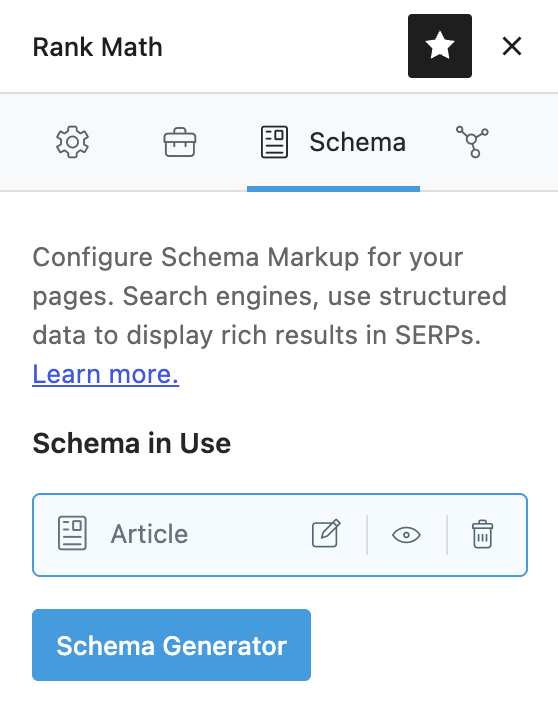
But Google’s guidance also clarified something important: structured data is not a special requirement for appearing in generative AI search features. There is no unique schema type, markup shortcut, or AI-only structured data strategy that automatically makes a website more visible in AI Overviews or AI Mode.
For business leaders, the takeaway is simple: schema is worth doing when it supports the page, the user, and the broader SEO strategy. It is not worth treating as a magic switch for AI visibility.
That distinction matters. A good SEO + AIO strategy should not abandon structured data, but it should also not overpromise what schema can do on its own. Like content structure, internal linking, metadata, and technical maintenance, schema works best when it is part of a connected strategy designed to make the site clearer, more useful, and easier to understand.
What It Takes to Keep Your Business Visible as Search Changes
Google’s guidance reinforced something businesses have always needed to do well: give customers useful information, make that information easy to find and use, and keep improving based on what actually drives results.
That takes more than publishing a few articles or fixing an occasional technical issue. It requires a connected SEO + AIO strategy built around three priorities.
Give Customers a Real Reason to Choose You
A strong content strategy begins with, “What does a potential customer need to understand before they can make a confident decision?” Not, “What keywords can we target?”
So, creating good content might mean explaining a complicated service in plain language. It might mean helping someone compare options, understand a risk, prepare for a purchase, or recognize why one solution is a better fit than another. The goal is to create information that gives customers a reason to trust your business over the dozens of competitors saying the same thing. That is where expertise matters.
Your business has experience, processes, customer conversations, lessons learned, and a point of view that another company cannot simply copy. A good SEO & AIO strategy turns that knowledge into useful content: stronger service pages, clearer product information, updated resources, practical articles, and answers that help people move closer to a decision.
The more your content helps someone make sense of a real problem, the more valuable it becomes to the people searching for it.
Make Sure Your Best Work Can Be Found and Used
Useful content cannot do much for your business if it is difficult to find, slow to load, buried in a confusing site structure, or unavailable to search engines. This is where technical SEO matters.
Technical work is often invisible when it is done well. Customers do not usually notice that a page was properly indexed, a redirect was fixed, or an internal link helped them reach the right information. They notice that the site worked, the answer was easy to find, and the next step felt clear — that’s the standard your site needs to hit.
Maintaining a healthy website means monitoring the practical issues that can quietly limit visibility or weaken trust, including crawlability, indexing, site structure, internal linking, broken pages, duplicate content, mobile usability, page speed, and outdated information.
Know What Is Working Before You Spend More
SEO & AIO is a game with ever-changing rules. Personally, that’s what makes it fun, for businesses, it’s a liability.
Search behavior changes. Competitors change. Your business priorities change. A page that once performed well can lose relevance, while a newer topic can begin bringing in highly engaged visitors who are ready to take action.
That’s why it’s crucial to build reporting into your existing process.
A strong measurement process looks at the full picture:
- Organic visibility and traffic to priority pages
- AI referral traffic and how those visitors engage
- Leads, purchases, form submissions, or other meaningful conversion actions
- Content that is gaining traction or falling behind
- Technical issues that may be limiting performance
- Opportunities to shift effort toward work that is producing stronger results
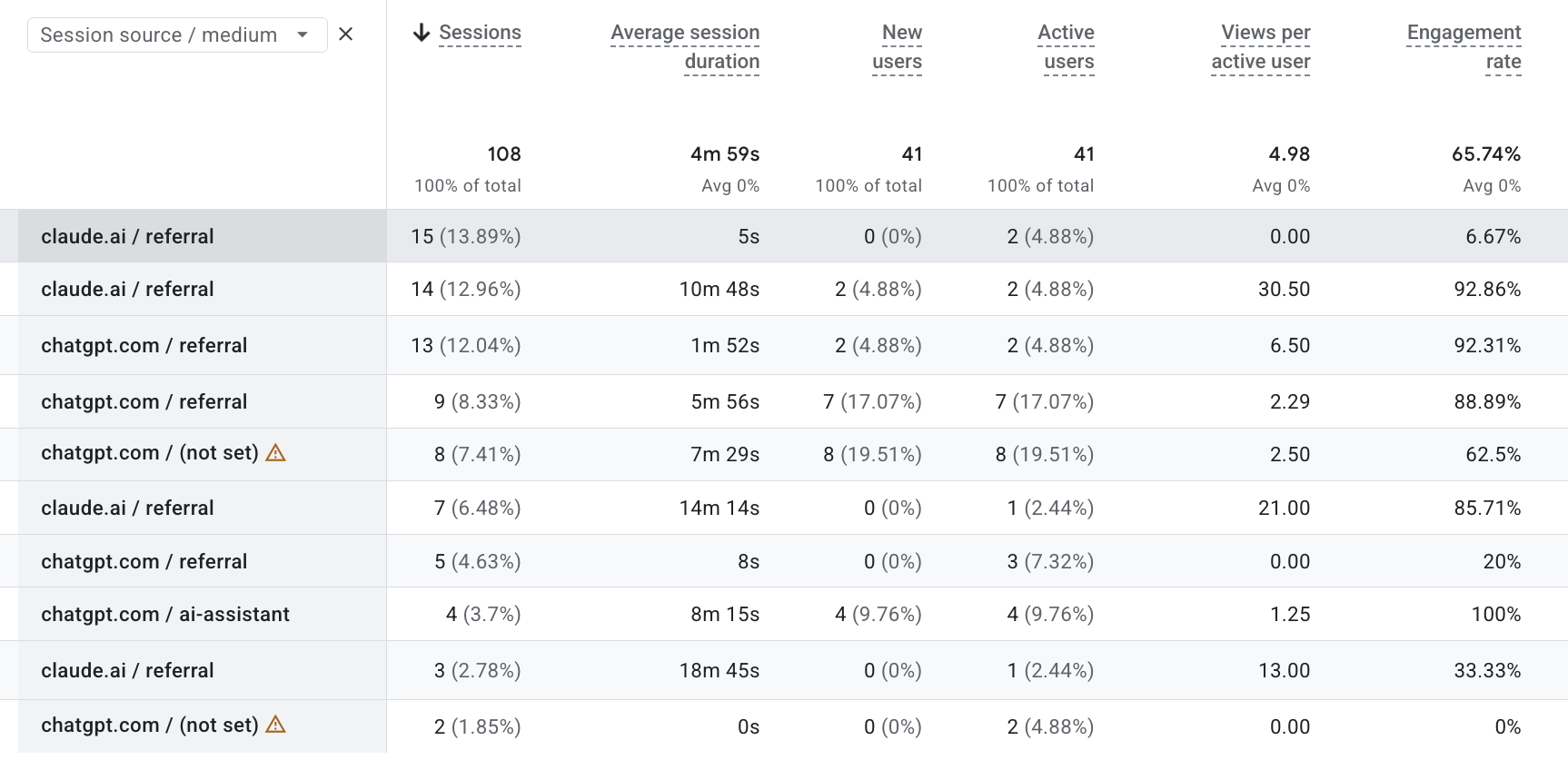
AI referral traffic may still represent a relatively small share of overall site traffic for many businesses. That makes the right question is: What are these visitors doing, and what does that tell us about how customers are discovering and evaluating our business?
When content, technical SEO, and reporting work together, businesses can build strategy that can keep up with change.
How to Tell Whether Your Generative Search Optimization Is Actually Working
AI referral traffic is worth watching, but it is not the only measure that matters. It’s just the newest.
A customer may first encounter your business through an AI-generated response, return later through Google, revisit a service page directly, and convert days or weeks afterward.
A reporting process broad enough to connect the journey through all these touchpoints should track:
- Organic Visibility: Are priority pages gaining impressions, clicks, and qualified traffic from the searches that matter to your business?
- AI Referral Traffic: Are identifiable AI platforms sending visitors to your site? Which pages are they landing on, and how do those visitors engage once they arrive?
- Engagement Quality: Are visitors reading key pages, moving deeper into the site, returning later, or showing other signs that they found useful information?
- Conversions: Are visitors submitting forms, requesting consultations, making purchases, calling your team, downloading resources, or completing other meaningful actions?
- Technical Progress: Are indexing issues, crawl barriers, broken pages, duplicate content, slow load times, or other technical problems limiting the performance of important pages?
- Next-Step Opportunities: What should be updated, expanded, fixed, or prioritized next based on what the data shows?
What Should Businesses Do If They Want to Stay Visible Without Chasing AI Hype?
Start with the work that gives your business a real foundation: understand what your customers need, create information that helps them make decisions, keep your website healthy enough for search engines and people to use, and measure what happens after visitors arrive.
Then keep refining.
That is how SEO and AIO becomes a way to protect the visibility you have earned, find new opportunities to reach the right customers, and make better decisions about where your marketing budget goes next.
Your business deserves visibility
Our team has been increasing visibility for our clients for 10 years. Let us help you grow.
Your business deserves visibility
Our team has been increasing visibility for our clients for 10 years. Let us help you grow.
Let Us Help


